
What Is Fever in Children? When to Worry
Is a fever always dangerous?
No. Fever is often a normal immune response to infection. The child’s age, appearance, breathing, hydration, behavior, and other symptoms are important when judging urgency.
What temperature is considered a fever?
A temperature of 100.4°F (38°C) or higher is generally considered a fever. In babies younger than 3 months, that temperature requires prompt medical attention.
Should I wake my child to give fever medicine?
Ask your pediatrician for advice based on your child’s age, weight, symptoms, and sleep. Medicine should be used according to professional or label directions and primarily to improve comfort.
Can I use a cold bath to lower a fever?
Cold baths, ice, and rubbing alcohol are not recommended. Use light clothing, comfortable room temperature, fluids, rest, and professional guidance instead.
What if my child’s fever comes back after medicine?
Fever medicine may temporarily reduce temperature and improve comfort, but it does not remove the underlying cause. Continue monitoring your child and call if symptoms worsen, persist, or concern you.
Fever in children is a temperature of 100.4°F (38°C) or higher and is usually a sign that the body is responding to an infection. Fever can help fight infection, but your child’s age, symptoms, hydration, behavior, and temperature all matter when deciding whether to provide comfort care, call the pediatrician, or seek emergency help.
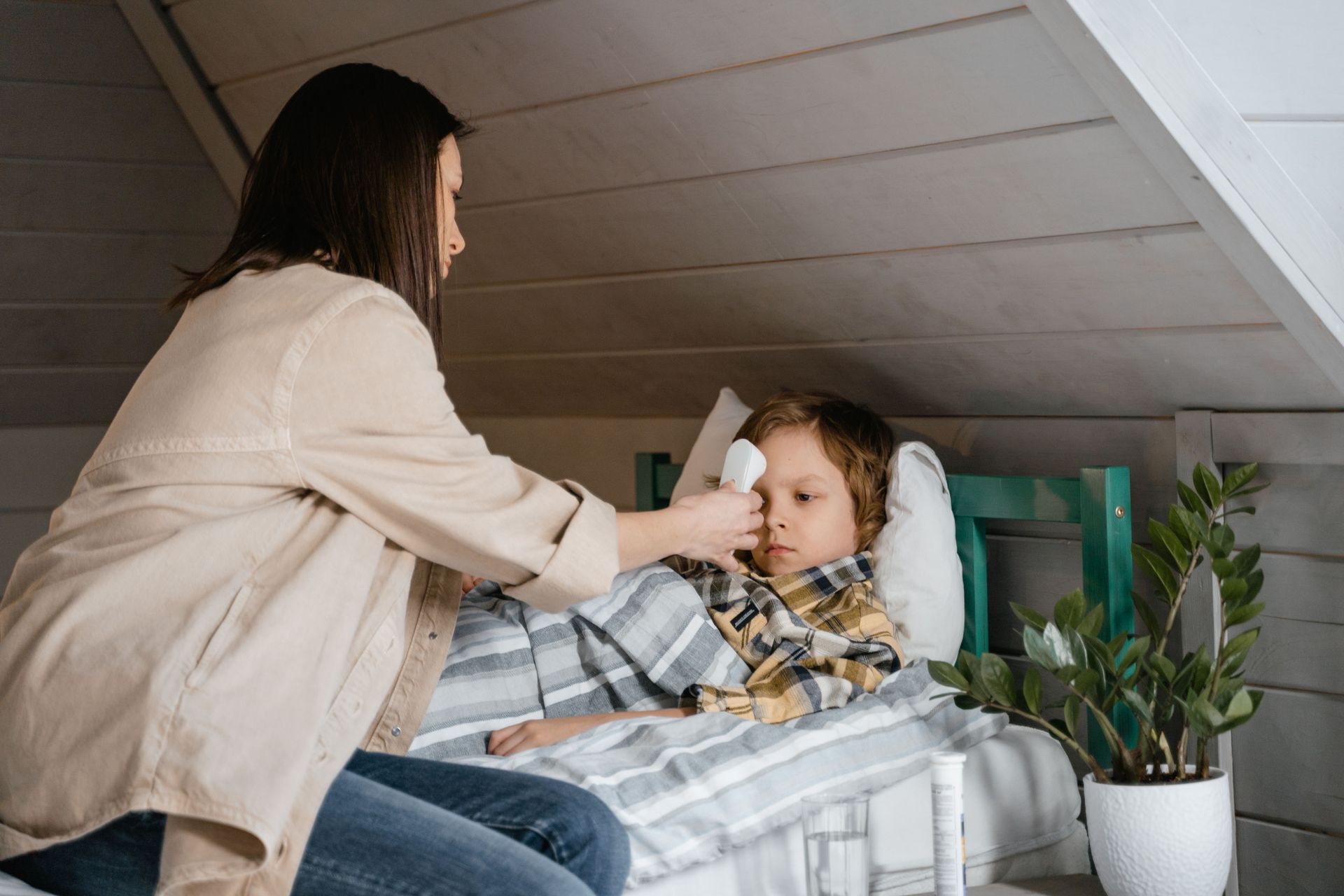
What counts as a fever in children?
A fever generally means a body temperature of 100.4°F or higher . Temperature readings can vary depending on the method used, the time of day, recent activity, and your child’s age. If you are unsure whether a reading is accurate, take it again according to the thermometer’s instructions.
The number is only one part of the picture. Also notice whether your child is drinking, urinating, breathing comfortably, responding normally, and improving with rest. A child with a modest fever who is alert and drinking may need less urgent attention than a child who appears very ill.
For general guidance about common childhood illnesses, visit our Is Your Child Sick?® resource.
Why does fever help fight infection?
Fever is part of the body’s natural immune response. Raising body temperature can make conditions less comfortable for some germs while helping the immune system respond. In many cases, fever itself is not dangerous and does not need to be completely eliminated.
The goal of care is usually to help your child rest, drink, and feel more comfortable—not simply to make the thermometer show a normal number. Your pediatrician can help you interpret a fever alongside your child’s symptoms and medical history.
How can you make a child with a fever more comfortable?
Comfort care can help your child rest while the illness runs its course:
- Offer frequent fluids, such as water, breast milk, formula, or other age-appropriate drinks.
- Encourage rest, but do not force your child to stay in bed if they feel well enough to move around quietly.
- Dress your child in light, comfortable clothing and avoid heavy blankets.
- Keep the room comfortably cool, not cold.
- Offer foods if your child is hungry, but do not force meals.
- Monitor urination, alertness, breathing, and overall behavior.
Avoid cold baths, ice, or rubbing alcohol. These measures can make a child uncomfortable or cause other problems. Never give aspirin to a child unless a healthcare professional specifically instructs you to do so.
If your child needs evaluation for an illness, learn more about our Sick Child Visits . For routine preventive care, including monitoring development and overall health, explore our Well Child Visits .
How should fever medicine be given?
Fever-reducing medicine may improve comfort, but it does not treat every cause of fever. Doses for children are based on weight , not just age. Use the product label, the measuring device supplied with the medicine, and instructions from your child’s healthcare professional.
Do not guess a dose, combine products with the same active ingredient, or give medicine more often than directed. When you need help choosing or measuring a dose, ask us first . Our Medicine Dosages resource may also provide useful guidance, but your pediatric team should answer questions specific to your child.
Never give an infant or child medication intended for another person. If your child has a chronic condition, takes other medicines, or has had a reaction to medicine, tell the pediatrician before giving a fever reducer.
When should you call the pediatrician about a fever?
Call Rivertown Pediatrics for guidance when you are worried about your child, the fever persists, or your child is not acting normally. Any temperature of 100.4°F or higher in a baby younger than 3 months requires prompt medical attention. Contact us rather than waiting to see whether it improves.
You should also call when your child:
- Is difficult to wake, unusually confused, very irritable, or much less responsive than usual.
- Is not drinking or is urinating much less than usual.
- Has repeated vomiting, significant diarrhea, or signs of dehydration.
- Has pain that is severe, worsening, or difficult to explain.
- Has a weakened immune system or a serious underlying health condition.
- Has a fever that concerns you even if you cannot identify a specific warning sign.
Share the temperature, how it was measured, when symptoms began, what your child has been drinking, and any medicine already given. These details help the care team recommend the next step.
When should a child with a fever go to the ER?
Seek emergency care immediately for signs of a potentially serious problem, including:
- Trouble breathing, blue or gray lips, or severe chest pulling with breaths.
- A seizure, collapse, inability to wake, or a child who is not responding normally.
- A stiff neck with severe illness, or a rapidly spreading purple or bruise-like rash.
- Severe dehydration, such as no urination for a concerning period, extreme weakness, or inability to keep fluids down.
- Any situation in which you believe your child is in immediate danger.
If you are unsure whether the situation is an emergency, err on the side of safety. Call emergency services for immediate danger. For non-emergency questions, contact our office or review our Emergencies and After Hours information.
What should parents know about fever in babies?
Babies—especially those younger than 3 months—need prompt medical evaluation for a temperature of 100.4°F or higher. Young infants may not show obvious symptoms even when they are seriously ill. Do not rely only on whether the baby seems comfortable.
Call promptly and be ready to report the temperature, measurement method, feeding, wet diapers, breathing, and behavior. Do not delay care to try several home remedies or to wait for medicine to lower the temperature.
Our Newborns page offers additional information for families caring for young babies.
Frequently asked questions about fever in children
Is a fever always dangerous?
No. Fever is often a normal immune response to infection. The child’s age, appearance, breathing, hydration, behavior, and other symptoms are important when judging urgency.What temperature is considered a fever?
A temperature of 100.4°F (38°C) or higher is generally considered a fever. In babies younger than 3 months, that temperature requires prompt medical attention.Should I wake my child to give fever medicine?
Ask your pediatrician for advice based on your child’s age, weight, symptoms, and sleep. Medicine should be used according to professional or label directions and primarily to improve comfort.Can I use a cold bath to lower a fever?
Cold baths, ice, and rubbing alcohol are not recommended. Use light clothing, comfortable room temperature, fluids, rest, and professional guidance instead.What if my child’s fever comes back after medicine?
Fever medicine may temporarily reduce temperature and improve comfort, but it does not remove the underlying cause. Continue monitoring your child and call if symptoms worsen, persist, or concern you.
What is the next step for your child?
Fever in children is commonly part of the body’s response to infection, but age and overall condition determine what to do next. Keep your child comfortable, offer fluids, use only weight-based medicine guidance, and contact a pediatric professional with questions. Remember that a temperature of 100.4°F or higher in a baby younger than 3 months needs prompt attention, while breathing problems, seizures, unresponsiveness, severe dehydration, or other emergency signs require immediate care. For advice or an appointment in Columbus, Georgia, book a visit with Rivertown Pediatrics .